Tooth extractions are common — a badly decayed tooth, an impacted wisdom tooth, a tooth that can’t be saved after trauma. The extraction itself is often quicker and less painful than patients expect. Recovery, though, depends heavily on what you do (and don’t do) in the first week.
This guide covers the full aftercare timeline, warning signs to watch for, and how to avoid the most common complication — dry socket.
The First 24 Hours: The Critical Window
The first day is when the blood clot forms in the socket. That clot is essential — it protects the underlying bone and nerve endings and is the foundation for healing.
Immediately After the Extraction
- Bite firmly on the gauze pad for 30–45 minutes. Change the gauze if it’s soaked, but avoid frequent changes — each change disturbs the clot.
- Do not spit, rinse, or use a straw. All three create suction that dislodges the forming clot.
- Apply a cold compress to the outside of the cheek — 20 minutes on, 20 minutes off, for the first 3–4 hours. This controls swelling.
- Rest with your head slightly elevated on two pillows.
- Take pain relief as prescribed — starting before the local anaesthesia wears off keeps things comfortable.
The Rest of Day One
- Eat only cool, soft foods.
- Do not smoke — this is the single biggest risk factor for dry socket.
- Do not drink alcohol.
- No rinsing, gargling, or spitting.
- Keep talking and chewing gentle.
Day 2–7: Early Healing
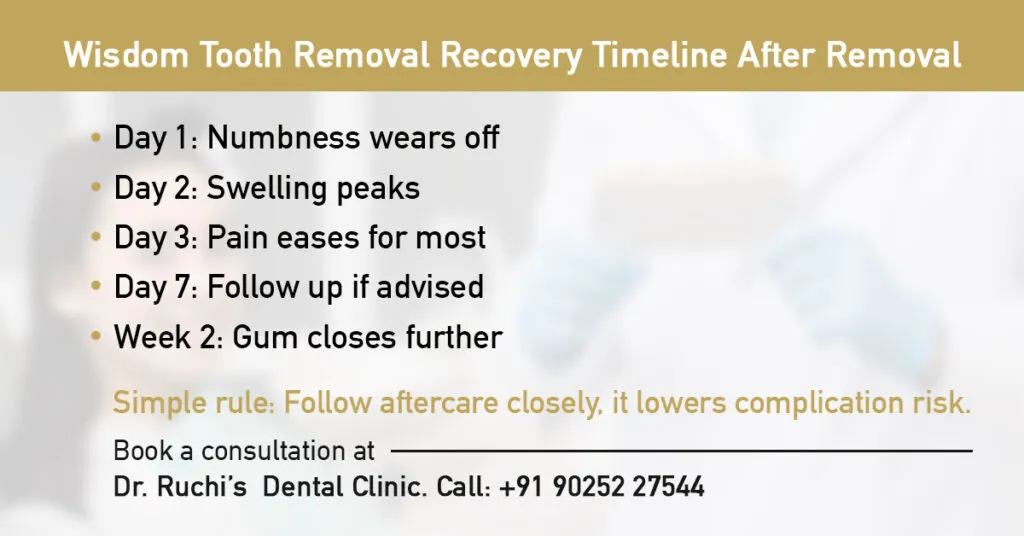
By day two, mild bleeding may still ooze on the pillow. This is normal. Swelling often peaks on day 2 or 3, then settles.
Care routine
- Warm salt water rinses 3 to 4 times a day, especially after meals. Mix half a teaspoon of salt in a glass of warm water. Rinse gently — no vigorous swishing.
- Continue to brush your other teeth, using a soft-bristled brush gently around the extraction site from day 2.
- Progress diet to soft-cooked foods: scrambled eggs, well-cooked pasta, mashed vegetables, soft fish, dal-rice.
- Chew on the opposite side of your mouth.
- Take the full course of any prescribed antibiotics.
Warning signs — call the clinic
- Severe pain after day 3 that is worse than the previous days
- A bad taste or foul odour from the socket
- Visible bone in the socket (dry socket)
- Bleeding that hasn’t slowed 24 hours after the extraction
- Fever above 38°C
- Swelling that worsens after day 3 instead of settling
What is Dry Socket, and Why It Matters
Dry socket (alveolar osteitis) is the most common post-extraction complication. It happens when the protective blood clot dislodges or dissolves too early, leaving the bone and nerve endings exposed to air, food, and bacteria.
Symptoms:
- Severe pain starting 2 to 4 days after extraction
- Pain often radiating to the ear, temple, or eye
- A bad taste or foul smell
- The socket looks empty rather than filled with a dark clot
Risk factors:
- Smoking (biggest single factor)
- Vigorous rinsing or spitting
- Using a straw
- Difficult or surgical extractions (wisdom teeth are highest risk)
- Oral contraceptive use in women (mild increased risk)
- Poor oral hygiene
If it happens: Come in. The dentist cleans the socket and places a medicated dressing that relieves the pain within 15 to 20 minutes. You’ll need one or two review visits to change the dressing.
Weeks 2–4: Soft-Tissue Recovery
By week two most patients feel largely normal. The gum tissue closes over the socket, though the underlying bone continues to remodel for several months.
- Return to a normal diet, favouring the healing side less until it feels comfortable.
- Resume gentle flossing near the extraction site.
- If a wisdom tooth was removed, jaw stiffness for 1–2 weeks is common — warm compresses and gentle stretching help.
Special Situations
Wisdom Teeth (Especially Impacted)
Surgical extractions of impacted wisdom teeth involve more swelling, bruising, and stiffness than simple extractions. Expect:
- Cheek swelling for up to a week.
- Bruising along the jawline for 5–10 days.
- Limited mouth opening (trismus) for 1–2 weeks — this is normal and improves with warm compresses.
- Numbness of the lip or tongue in some cases — usually temporary but tell the dentist if it persists beyond 3 weeks.
Multiple Extractions
If several teeth are removed in one visit, follow the same aftercare but expect a longer recovery — usually 1 to 2 weeks to feel back to normal. Nutrition matters — a period of soft foods can leave you low on protein. Consider protein shakes, smoothies with yoghurt and nut butter, and dal-based soups.
Extraction Before an Implant
If your extraction is part of a planned implant, the site may be treated with a bone graft to preserve the socket. Follow the specific instructions for graft care — usually softer diet for longer, and no pressure on the site until the graft has stabilised (4–6 months).
Diabetic Patients
Diabetes can slow healing. Keep blood sugar stable in the days after extraction, follow antibiotic instructions carefully, and expect a slightly longer healing window. Come in for review if the site looks unusual.
What to Eat and What to Avoid
First 24 hours:
- ✅ Yoghurt, cold soup, applesauce, mashed banana, smoothies (spoon, not straw), soft-cooked eggs
- ❌ Hot food or drinks, spicy food, crunchy food, alcohol, straws, smoking
Days 2–7:
- ✅ Scrambled eggs, dal-rice, soft-cooked vegetables, well-cooked pasta, mashed potato, soft fish, khichdi, oats
- ❌ Nuts, chips, crusty bread, popcorn, spicy chutneys, small seeds that can lodge in the socket, alcohol
Week 2+:
- Return to normal diet as comfort allows, favouring the healing side less for another week.
Cleaning the Extraction Site
- Do not brush the socket for 24 hours.
- From day 2, use a soft brush gently around the area.
- Continue warm salt water rinses 3–4 times a day for the first week.
- After a week, the site is usually stable enough for gentle flossing nearby.
When You’ll Feel Normal
- Day 3–4: noticeable improvement in pain and swelling
- Day 7: most patients no longer need pain relief and eat most foods comfortably
- Week 2: soft tissue is largely healed; normal daily life
- Month 3–6: the bone in the socket has fully remodelled
Call the Clinic
If anything about your recovery feels wrong — worsening pain, prolonged bleeding, fever, or a socket that looks empty — call us. +91 90252 27544. Dry socket and infection are both treatable, but only if you come in.
For more on when a tooth may need to come out in the first place, see our guide to sudden tooth pain, or read about wisdom tooth removal.