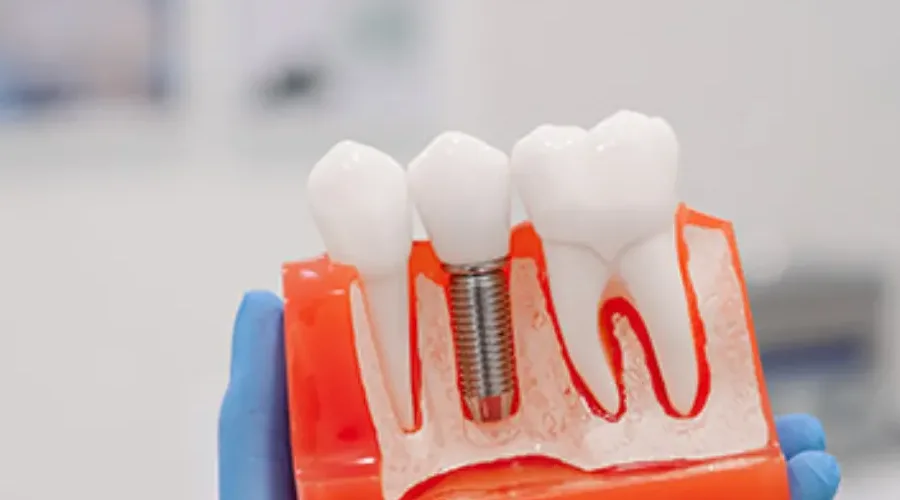
Dental implant surgery is a major step toward restoring your smile and bite. The surgery itself is only the beginning — how you care for the implant in the days, weeks, and months after has a direct impact on how well it heals and how long it lasts.
This guide walks you through the full recovery timeline, from the first 24 hours through to the final crown, with practical tips at every stage.
The First 24 Hours
The first day after implant surgery is the most important for setting up good healing.
Immediate Post-Surgery (0–4 hours)
- Bite gently on the gauze placed by your dentist for the first 30–45 minutes to control bleeding. Change gauze if it becomes saturated.
- Do not rinse, spit forcefully, or use a straw — the suction can dislodge the clot forming over the surgical site.
- Apply a cold compress to the outside of your cheek for 20 minutes on, 20 minutes off, for the first 4 hours to minimise swelling.
- Rest with your head slightly elevated. Two pillows help.
The Rest of Day One
- Take pain relief exactly as prescribed. It’s easier to stay ahead of pain than catch up to it.
- Eat only cool, soft foods — yoghurt, cold soup, applesauce, mashed banana. Avoid anything hot or hard.
- Do not smoke, drink alcohol, or exercise.
- Brush your other teeth normally, but avoid the surgical site.
Days 2–7: Early Healing
Swelling usually peaks around day 2 or 3 and then settles. Some bruising on the cheek or jaw is normal.
What to do
- Warm salt water rinses 3 to 4 times a day, especially after meals. Mix half a teaspoon of salt in a glass of warm water. Rinse gently — no vigorous swishing.
- Soft diet continues. Add scrambled eggs, well-cooked pasta, soft-cooked vegetables, and fish. Chew on the opposite side.
- Keep the surgical site clean. From day 2, a very soft toothbrush can be used gently around the site — your dentist will show you exactly how.
- Finish any antibiotics prescribed to you, even if the site feels fine.
What to avoid
- Smoking (major impact on healing)
- Alcohol (interferes with medications and healing)
- Straws and vigorous rinsing
- Hard, crunchy, or sticky foods
- Vigorous exercise or heavy lifting
Warning signs to call about
- Severe pain not controlled by prescribed medication
- Bleeding that hasn’t slowed by 24 hours
- Fever above 38°C
- A bad taste or discharge from the surgical site
- The implant feels loose or has shifted
Weeks 2–6: Soft-Tissue Recovery
By week two, most patients feel largely normal. Stitches (if placed) are usually removed at the 1–2 week review. The gum tissue continues to remodel around the implant.
- Resume gentle flossing near the implant after 2 weeks.
- Return to a normal diet progressively — you’ll know what feels comfortable.
- Attend your review appointment. The dentist checks the site, removes stitches, and confirms healing is on track.
Months 1–6: Osseointegration
This is the phase most patients don’t see but that matters most. During osseointegration, bone cells grow into the titanium surface of the implant, locking it in place. This takes 3 to 6 months depending on where the implant is, the quality of the surrounding bone, and your general health.
You’ll come in for check-ups during this phase, but daily life is normal:
- Brush and floss around the implant like a natural tooth.
- Attend hygiene appointments as recommended.
- Avoid biting extremely hard foods on the healing side until the implant is fully loaded.
- Continue to avoid smoking — the impact on osseointegration is well established.
The Final Crown
When your dentist confirms osseointegration is complete, the implant is ready to receive its final crown. This visit typically involves:
- Removing the healing abutment.
- Taking a digital scan or impression.
- Fitting a custom abutment and the final crown, usually across 1–2 visits.
Once the crown is in place, the implant behaves like a natural tooth — you eat, brush, and floss normally.
Long-Term Care
Well-maintained implants can last 20 years or longer. Care after healing is straightforward:
- Brush twice a day with a soft-bristled brush.
- Floss daily, using interdental brushes or superfloss around the implant if needed.
- Attend six-monthly cleanings and check-ups — professional cleaning around implants uses instruments designed not to scratch the surface.
- Don’t chew ice, hard sweets, pen caps, or bottle tops — the crown is strong but not indestructible.
- Manage grinding with a night guard if your dentist recommends one.
Special Situations
Immediate-Load Implants (All-on-Four)
For All-on-Four cases, a fixed temporary set of teeth is placed on the day of surgery. Aftercare is similar in principle but with additional care around the temporary bridge — a soft diet for the first 6–8 weeks is essential to allow the underlying implants to integrate.
Sinus Lift or Bone Graft
If your surgery included a sinus lift or bone graft, follow the extra instructions from your dentist carefully — do not blow your nose forcefully for 2 weeks, sleep with your head elevated, and avoid air travel for the timeframe your dentist advises.
Diabetic Patients
Well-controlled diabetes is not a barrier to successful implants, but healing may be slower. Your dentist will coordinate the timing of surgery with stable blood sugar and may extend the osseointegration period.
When to Call the Clinic
Most implant recoveries are uneventful. Contact us straight away if you have:
- Severe or increasing pain after day 3
- Bleeding that doesn’t settle
- Fever, swelling that’s getting worse, or discharge from the site
- A loose implant or crown
- Any concern about how the site looks
Phone: +91 90252 27544. We’d rather see you a day early than a week late.
The Bottom Line
Implant success is largely in your hands after you leave the clinic. Follow the timeline, take the medication, stay on soft foods for the first week, don’t smoke, and keep your review appointments. Do those five things and the odds of a healthy, long-lasting implant are excellent.
For more on the treatment itself, see our guide to dental implant options — single-tooth, All-on-Four, full mouth or the service page for dental implants in Coimbatore.